


I spend a lot of time checking whether a restaurant can genuinely handle a gluten-free meal, not just whether a menu contains a few items marked “GF.” That is where Find Me Gluten Free becomes useful. It is a free lifestyle app from Gluten Free Classes LLC that brings restaurant reviews into the decision, so I can look beyond a restaurant’s own advertising and see what other diners experienced.
My overall impression is positive, but I would use it as a research tool rather than as a guarantee of safety. A restaurant page can help me prepare questions, compare nearby choices, and spot patterns in customer feedback. It cannot replace a direct conversation with staff, especially when cross-contact could create a serious health problem. That distinction is the most important thing to understand before relying on the app.
How the restaurant search feels in everyday use
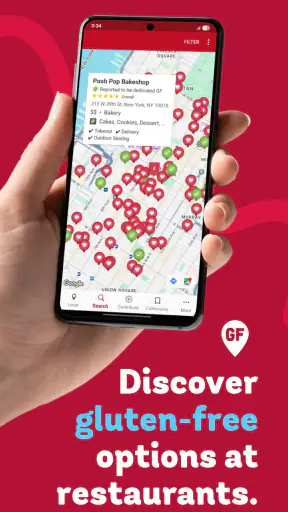
The app’s focus is clear from the first practical use: it is built around finding and evaluating places to eat gluten-free. Instead of opening a general map and manually searching through menus, I can use a service dedicated to this particular dining concern. That narrower purpose saves time when I am already hungry, traveling, or trying to choose somewhere with friends who do not follow the same diet.
A realistic example is a busy evening in an unfamiliar neighborhood. I might search for nearby restaurants, read recent-looking customer comments, and compare the quality of the gluten-free experience rather than choosing the closest place automatically. I pay attention to whether people mention staff knowledge, separate preparation, clear communication, and whether the meal matched expectations. Those details are often more useful than a simple label on a menu.
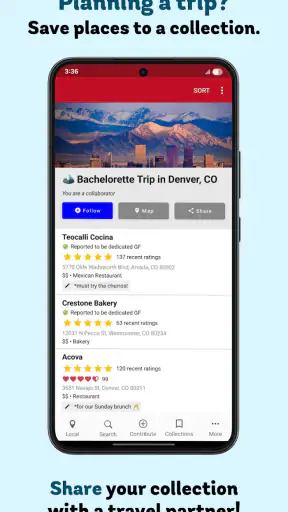
The app is also helpful before I leave home. If I am meeting friends at a restaurant I have never visited, I can use the listings to make a shortlist, then call the most promising option with specific questions. This is a better workflow than treating the app as the final authority: use it to narrow the field, then verify the details directly.
Its audience is broader than people with a diagnosed condition. Someone avoiding gluten by choice, a parent planning a family meal, or a traveler looking for familiar dining information can all benefit. Still, the value depends heavily on the quality and relevance of the local listings. In a large city, a review-based directory is more likely to give me several useful options. In a smaller area, I may find fewer choices and need to do more independent checking.
Find Me Gluten Free has been available since September 11, 2010, which gives it a long history compared with many short-lived food directories. The current release is version 3.2.0, and it supports devices running Android 7.0 or later. That broad compatibility is convenient for people who keep an older phone, although the experience can still vary depending on the device and operating system.
What I look for in reviews
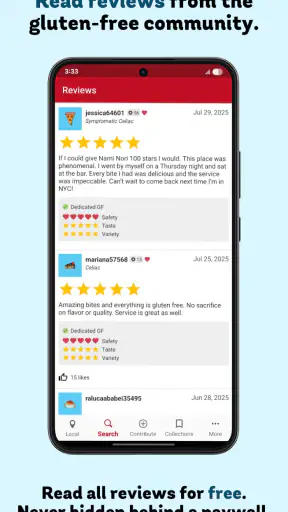
I do not read every review in the same way. A short comment saying that a restaurant “has gluten-free options” tells me very little. I look for practical observations: whether the server understood the request, whether the kitchen handled substitutions carefully, whether the diner felt comfortable asking questions, and whether the restaurant treated the request as routine rather than inconvenient.
One useful habit is to compare several comments instead of trusting the most enthusiastic one. A positive review may describe a good experience on one visit, while another may reveal that procedures are inconsistent between shifts. That does not automatically make the restaurant unsuitable, but it tells me to call ahead and explain my needs clearly.
I also separate preference from safety. A reviewer who dislikes the taste of a gluten-free pizza is not reporting the same thing as someone describing a cross-contact concern. The app gives me a place to find these experiences, but I still have to interpret them carefully. This is one of its strengths and one of its limitations: it provides useful human context, but the reader must judge how relevant each account is.
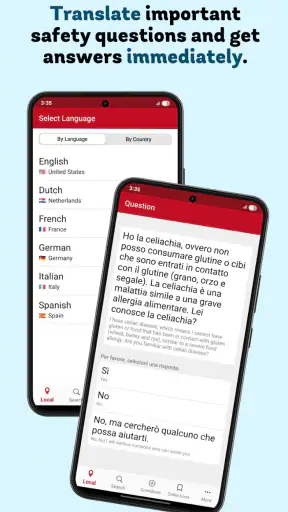
For a first visit, I would save time by writing down two or three questions before calling. I might ask whether the staff can identify gluten-free ingredients, whether preparation can be separated, and what they recommend for a strict request. The app is most effective when it turns vague browsing into a focused conversation with the restaurant.
Trust starts with how I handle the information
Because this is a review-driven service, I treat every listing as a starting point, not a certification. A restaurant can change suppliers, menus, kitchen routines, or staff training after a review is posted. Even a detailed comment may describe conditions that no longer exist. I therefore check the date and wording of what I read whenever that information is visible, and I avoid assuming that one successful meal predicts every future visit.
This cautious approach matters particularly for people with celiac disease or strong medical sensitivity. The app can help identify restaurants worth contacting, but it does not turn a crowd-sourced recommendation into a medical assurance. For less strict dietary preferences, the risk calculation may feel different, yet clear communication is still worthwhile because “gluten-free” can mean different things to different people.
The app’s popularity suggests that many people find this kind of directory useful: it has an average rating of 4.8 from around 14 thousand ratings and more than a million installs. I see those figures as evidence of broad interest and sustained use, not proof that every individual listing will suit me. A high overall score cannot remove the need to inspect local reviews and judge their detail.
Controls, choices, and data-sensitive moments
When I review an app like this, I pay attention not only to restaurant coverage but also to the choices it presents around participation. A review platform naturally becomes more valuable when people contribute, yet contribution also means I should pause before sharing anything personal. I prefer to keep comments focused on the meal, communication, and preparation rather than posting medical details that a restaurant or stranger does not need to know.
I would also avoid including identifying information about companions, children, or other diners in a public review. A useful contribution can say that staff answered questions clearly or that a request was handled poorly without naming a server or describing someone’s diagnosis. That keeps the review practical while reducing unnecessary exposure.
The app is free to download and use as a lifestyle service, with in-app purchases listed at $24.99 per item. That makes it easy to try without committing money at the beginning, but I would still inspect any purchase screen carefully before confirming anything. The important user habit is simple: read what the item unlocks, check whether it is genuinely useful for my situation, and do not assume that a free download means every part of the experience is free.
I would make the same distinction with an account. If the app asks me to sign in before I can contribute or manage activity, I would use only the information needed for that function and choose a password I do not reuse elsewhere. If I only need to browse restaurants, I would avoid volunteering extra profile information unless there is a clear benefit. The best privacy decision is often to share less, especially when the task is simply finding somewhere to eat.
Permissions deserve the same attention. I would approve only access that matches something I am actively trying to do, such as using location to find nearby restaurants if that choice is presented. If I am browsing a destination before traveling, I may prefer to search manually rather than leave location access enabled continuously. On both Android and iOS, I can revisit system permission settings later, so I do not treat the first prompt as a permanent decision.
There is a practical trade-off here. Location-based discovery is convenient when I am walking through an unfamiliar area, while manual searching gives me more control when I am planning from home. I like having that choice because it separates the app’s core purpose from a particular way of using it. If I do not want to share my current location, I can still approach the service as a directory and verify places by name or area.
Reviews themselves can reveal sensitive information even when I do not intend them to. A sentence about a severe reaction, a child’s condition, or a very specific travel itinerary may make a post more identifiable than expected. I would write as though the comment could be read by restaurant staff and other users indefinitely. That mindset produces clearer reviews and avoids turning a dining report into a personal medical record.
Where the app gives me control, and where judgment remains mine
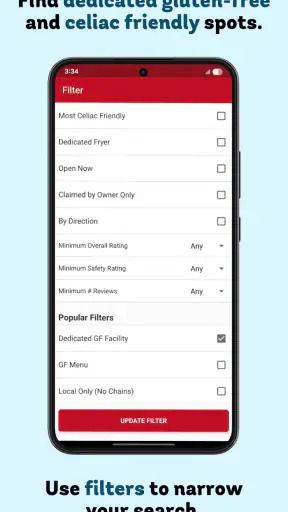
The strongest form of user control here is the ability to compare experiences rather than accept a single recommendation. I can decide which comments matter, which restaurant deserves a call, and whether the answers I receive are reassuring enough. That is more empowering than a generic list of “healthy” restaurants because it gives me context for making my own choice.
At the same time, community content can be uneven. Some people describe procedures in detail; others leave a quick rating with almost no explanation. I would not treat a high score without useful text as equivalent to a careful account. A low score may also reflect service speed or taste rather than gluten-free handling. Reading critically is not optional if the decision has health consequences.
One advanced but simple workflow is to use the app in two passes. First, I search broadly and identify several candidates. Second, I reread only the detailed comments and note recurring themes, including disagreements. Then I contact one or two restaurants with targeted questions. This prevents me from spending too long on every listing and reduces the chance that one dramatic review controls the decision.
Another useful approach is to treat the app as a record of questions, not just places. If several reviews mention confusion about sauces, shared fryers, or substitutions, I can add those subjects to my call checklist. Even when I choose a restaurant that is not the highest-rated option, I arrive better prepared. That is a real advantage over ordinary map searches, where the relevant dietary conversation may be buried or absent.
I would skip this app if I wanted a fully controlled meal-planning system, detailed nutrition tracking, or a substitute for professional dietary advice. Its purpose is restaurant discovery and community feedback. Someone who rarely eats out may find a general map app sufficient, especially if they already know how to contact restaurants directly. Likewise, a person who dislikes reading user-generated content may prefer calling trusted local restaurants one by one.
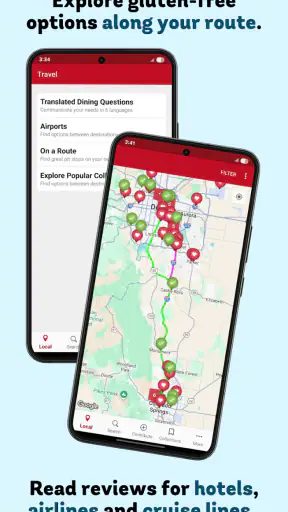
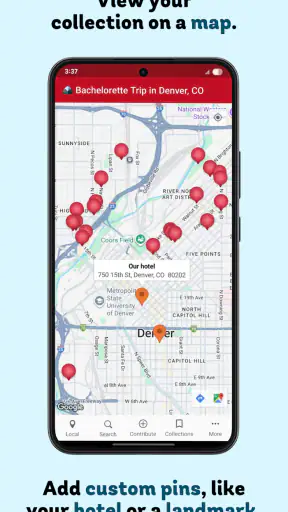
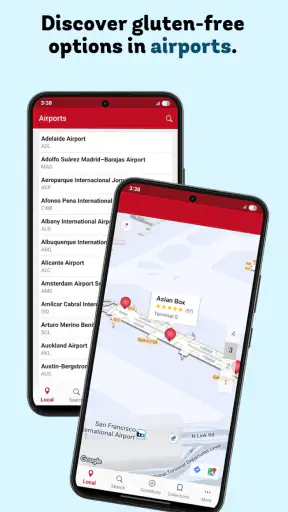
For travelers, the app is most useful when used before the trip and again near the actual meal. I would shortlist places in advance, save the questions I need answered, and recheck the restaurant on the day because menus and staffing can change. That two-stage process is less spontaneous than simply following the nearest pin, but it is more sensible when dietary reliability matters.
How it compares with ordinary alternatives
A general maps app is usually better for navigation, opening hours, directions, and broad restaurant discovery. It may also show menus and reviews, but gluten-free details can be scattered across unrelated comments. Find Me Gluten Free is better when my first question is not “What is nearby?” but “How have people handled gluten-free dining here?”
Restaurant websites are more authoritative for the menu a business currently publishes, yet they naturally present the restaurant’s own view. The app adds the customer perspective, including communication problems or practical successes that a polished menu may not mention. I would use both: the restaurant’s current information for what is offered, and the app’s reviews for clues about the real-world experience.
Calling restaurants directly remains the strongest alternative when I have strict requirements. A phone conversation lets me explain the situation and hear how confidently staff respond. The disadvantage is that it takes time and depends on reaching someone knowledgeable. Find Me Gluten Free helps me decide which calls are most worth making, which is where it complements rather than replaces direct contact.
Social media can provide very recent local recommendations, but it is often harder to search consistently and judge the context. A dedicated directory is more focused, while social posts may be more immediate. I would trust neither automatically. The best result comes from combining a focused review search with current restaurant confirmation.
Who will benefit most from it
I would recommend trying the app if eating out is a regular part of your life and you want more than a generic “gluten-free available” label. It is especially practical for people moving to a new city, planning group meals, or traveling somewhere they do not know. The free entry point makes experimentation easy, and the Everyone content rating makes it suitable for a broad audience.
Families may appreciate the preparation help, but I would be especially careful when a child has a strict medical need. I would use the app to find candidates and read how staff communicate, then verify the kitchen’s practices directly. The same advice applies to anyone whose reaction is severe: convenience should never outweigh confirmation.
People who contribute thoughtful reviews can also improve the service for others. The most helpful post is not necessarily the longest. I would mention what I ordered, how the request was communicated, whether staff answered specific questions, and what practical limitation I encountered. I would avoid presenting my experience as a universal guarantee.
Gluten Free Classes LLC has kept the app focused on a clear everyday problem rather than turning it into a broad lifestyle platform. That focus is why I return to it when I need restaurant-specific context. Still, the app cannot control the accuracy of every user report or the consistency of every kitchen. Its usefulness depends on my willingness to read carefully and verify important details.
My cautious verdict
After using it as a restaurant research companion, I see Find Me Gluten Free as a genuinely useful first step for gluten-free dining. It saves me from starting with a blank map, gives me customer experiences to compare, and helps me ask better questions before ordering. Its strongest feature is not a promise of certainty; it is the practical context that ordinary restaurant searches often lack.
I would install it for travel, unfamiliar neighborhoods, and group meals where I need to find realistic options quickly. I would not use it as a certification system, and I would not let a glowing review replace a current conversation with the restaurant. I would also keep my account and review activity restrained, share only what is necessary, and review purchase and permission prompts before accepting them.
With an average rating of 4.8 and a large installed audience, it has clearly become a familiar resource for many gluten-free diners. For me, its value comes from using that community knowledge thoughtfully rather than accepting it blindly. My recommendation is to treat the app as a smart shortlist builder: useful, focused, and worth trying, provided I keep final responsibility for the meal decision.
That balance makes it a better choice than a generic restaurant directory for gluten-free discovery, while still leaving room for direct calls, current menus, and personal judgment. If that is the kind of help you need, the free app is easy to test. If you need guaranteed medical certainty or a complete nutrition-management tool, I would choose a more specialized solution and use this only as an optional source of local leads.


